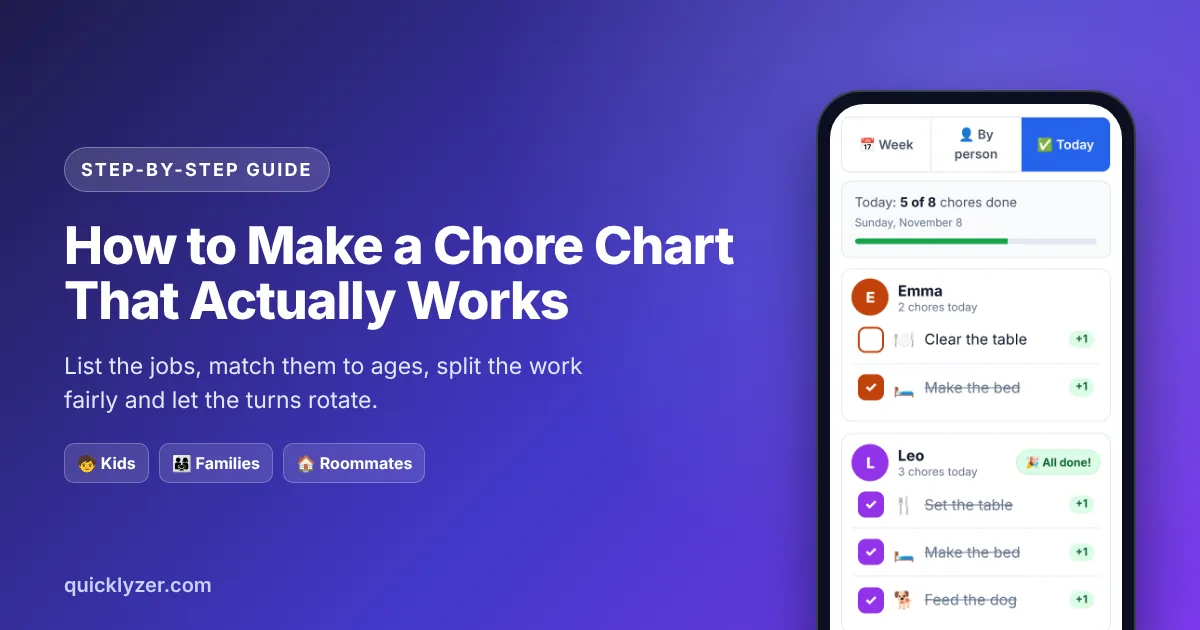
Almost every family has made a chore chart that was forgotten within a few weeks. It usually breaks down in the same few ways: the list is too long, nobody knows what “clean your room” actually means, the work isn’t shared out fairly, and nothing happens when the boxes stay empty. Within a couple of weeks the chart is just another piece of paper on the fridge.
This guide shows you a simple way to build a chore chart that keeps working, whether it is for one toddler, a busy family or a flat full of roommates. We follow one real example from start to finish. Emma is 10, Leo is 6, and their parents want the housework shared out without arguments. We set it up in our free Chore Chart Maker, but every step works just as well with a pen and paper.
How to Make a Chore Chart in 7 Steps
The quick overview comes first. The details for each step follow.
- List every job your home needs, and how often it needs doing.
- Define “done” for each chore in one short line.
- Match chores to ages and to what each person can really do.
- Weigh the work with points, so the split is fair and not just equal.
- Decide who does what: keep some jobs fixed and rotate the rest.
- Choose a reward system that fits your family, or decide not to use one.
- Put the chart where everyone sees it and review it once a week.
Why a Chore Chart Works When Reminders Don’t
Telling someone to do a chore puts the job on the person doing the telling. A chart puts it on the chart. Child development experts recommend exactly this kind of visible list. The American Academy of Child and Adolescent Psychiatry (AACAP) links regular chores with responsibility, time management and coping with frustration. It also notes that research points to benefits from as early as age 3. The American Academy of Pediatrics suggests posting a chore chart or checklist where your child can see it and adding new jobs one at a time. It also notes that nagging and scolding don’t work.
A chart helps adults too, because a lot of household work goes unnoticed until it is written down. In the U.S. Bureau of Labor Statistics’ 2024 time-use survey, 87% of women and 74% of men did some household work on an average day. On the days they did, women spent about 2.7 hours on it and men about 2.3. Couples often see the split differently, too. In a Pew Research Center survey, 59% of women said they did more of the chores, while only 34% of men said their partner did more. A written chart with agreed points ends most of those “I do everything” arguments, because everyone can see the actual numbers.
Step 1: List Every Job Your Home Needs
Before you think about who does what, write down everything that needs doing. Walk through the house room by room and add the jobs nobody notices until they are missed: refilling the soap, wiping the light switches, sorting the mail, cleaning out the fridge. Next to each job, write how often it really needs doing. You can sort them into these groups:
| How often | Typical jobs | Tip |
|---|---|---|
| Every day | Make beds, set and clear the table, dishes, feed pets, tidy toys, wipe the kitchen counter | Short jobs that are easy to tie to a meal or bedtime |
| A few times a week | Laundry, taking out the trash on collection days, watering plants | Pin them to real days, like the two trash collection days |
| Once a week | Vacuuming, cleaning the bathroom, changing sheets, grocery shopping | Let people choose the day, as long as it’s done by Sunday |
| Every 2 weeks or monthly | Cleaning the fridge, mopping floors, washing windows, paying bills | Easy to forget, so they need to be on the chart |
Then cut the list down. A chart with 30 chores won’t last. Keep the jobs that really matter each week, and break big, vague jobs into smaller ones a child can finish. “Clean the bathroom” becomes “wipe the sink and mirror” for an 8-year-old.
Step 2: Define What “Done” Looks Like
Arguments over chores are usually not about whether a chore was done. They are about whether it was done properly. Avoid them by writing a one-line definition next to any chore that could be done halfway:
- Make the bed — covers pulled up, pillow on top.
- Clear the table — plates in the dishwasher, table wiped.
- Feed the dog — one scoop of food, fresh water in the bowl.
- Tidy your room — floor clear, clothes in the hamper, toys in their bins.
In the Chore Chart Maker that line goes in the chore’s Note field and shows up under the chore on screen and on the printed chart. For a new job, show it first, then do it together, then let them do it alone. Expect a child’s best effort, not an adult’s standard.
Step 3: Match Chores to Ages and Abilities
A chore that is too hard leads to failure, and that makes the next chore harder to start. AACAP stresses that age-appropriate chores make success more likely. The table below is based on the age-based suggestions from AACAP and the American Academy of Pediatrics. Use it as a starting point, not a rule. A 6-year-old who has sorted laundry for a year may be ready for more than a 9-year-old who never has.
| Age | Jobs they can usually own | Good jobs to help with |
|---|---|---|
| 2–3 | Putting toys away | Putting groceries away, getting dressed |
| 4–5 | Feeding pets, making the bed (imperfectly) | Clearing the table |
| 6–7 | Wiping tables and counters, putting laundry away, sweeping, emptying small trash bins | Sorting laundry, watering plants |
| 8–10 | Loading and unloading the dishwasher, packing their own lunch, folding their own laundry | Vacuuming, cooking dinner, walking the dog, putting groceries away |
| 11–12 | Changing their sheets, cleaning the bathroom or kitchen, yard work | Washing the car, cooking a simple meal with an adult nearby |
| 13+ | Their own laundry, cooking a family meal, the weekly bathroom clean | Grocery shopping, errands, looking after younger siblings |
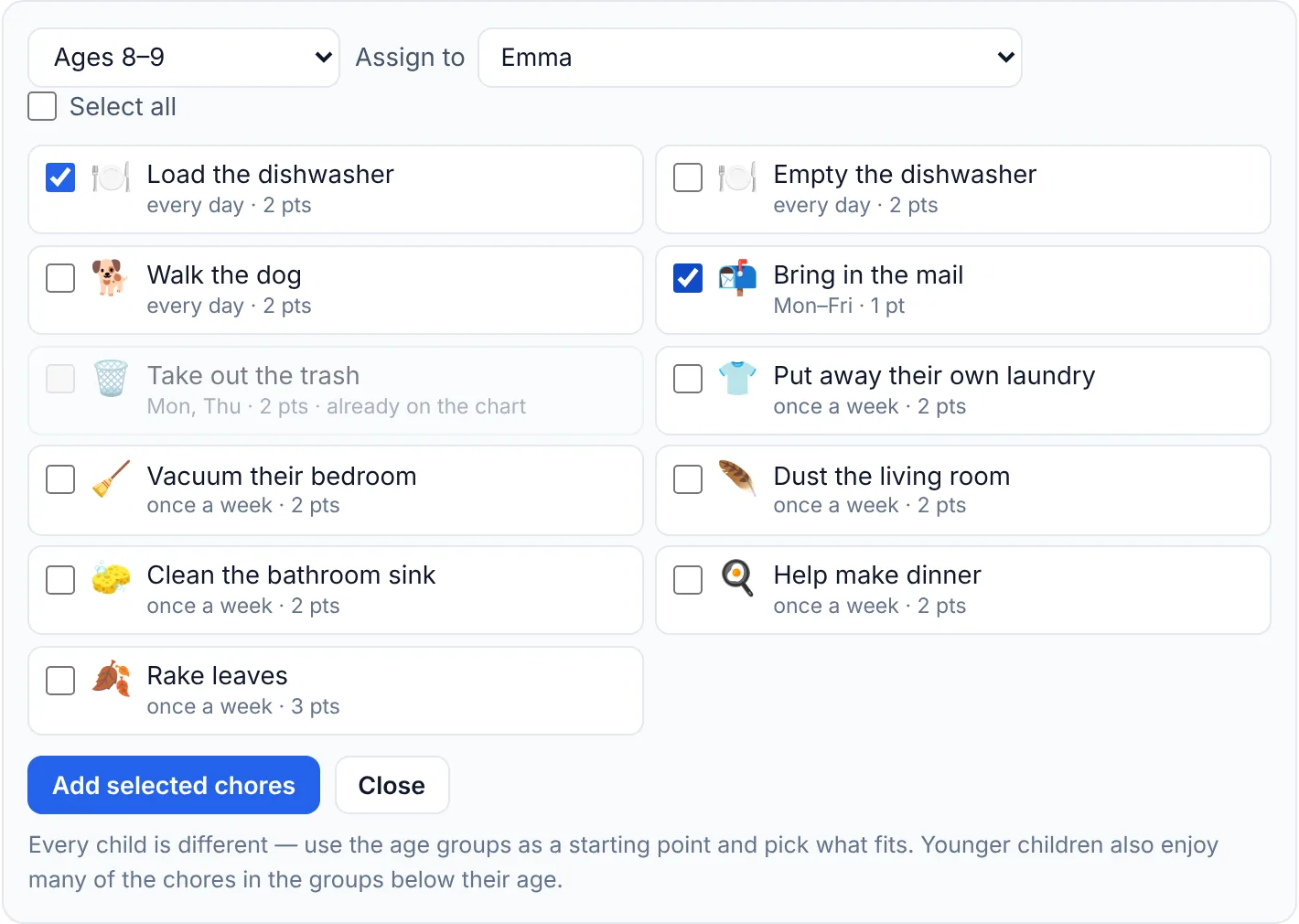
The pediatricians’ advice is to add one new chore at a time. A long list all at once can overwhelm a child, who may then refuse all of it. If you are stuck for ideas, open 💡 Chore ideas by age in the tool. It has 89 suggestions in eight groups, from toddlers to adults, pets and outdoor jobs. Select the jobs that fit, pick the child they are for and add them all at once. Chores already on the chart are greyed out, so you won’t add the same job twice.
Step 4: Weigh the Work So the Split Is Fair
Counting chores is the most common way to make a chart unfair. “Feed the dog” and “clean the bathroom” are both one chore, but one takes two minutes and the other takes half an hour. Give every job a few points based on effort instead. This scale is easy to agree on:
- 1 point — quick jobs, under 5 minutes (make the bed, feed the pet).
- 2 points — 5 to 15 minutes (empty the dishwasher, take out the trash).
- 3 points — 15 to 30 minutes (vacuum a room, cook dinner).
- 5 points — big jobs of 30 minutes or more (clean the bathroom, mow the lawn).
Then add up each person’s points for the week, counting every time the chore comes up. A daily 2-point chore is 14 points a week. A 3-point chore done once a week is just 3. Now you can see who has most of the work. The ⚖️ Share out fairly button in the Chore Chart Maker does this sum for you. It gives each chore with no owner to the person with the fewest weekly points. If every chore already has an owner, it rebalances the chores held by single owners, and you can undo it if the result doesn’t suit you.
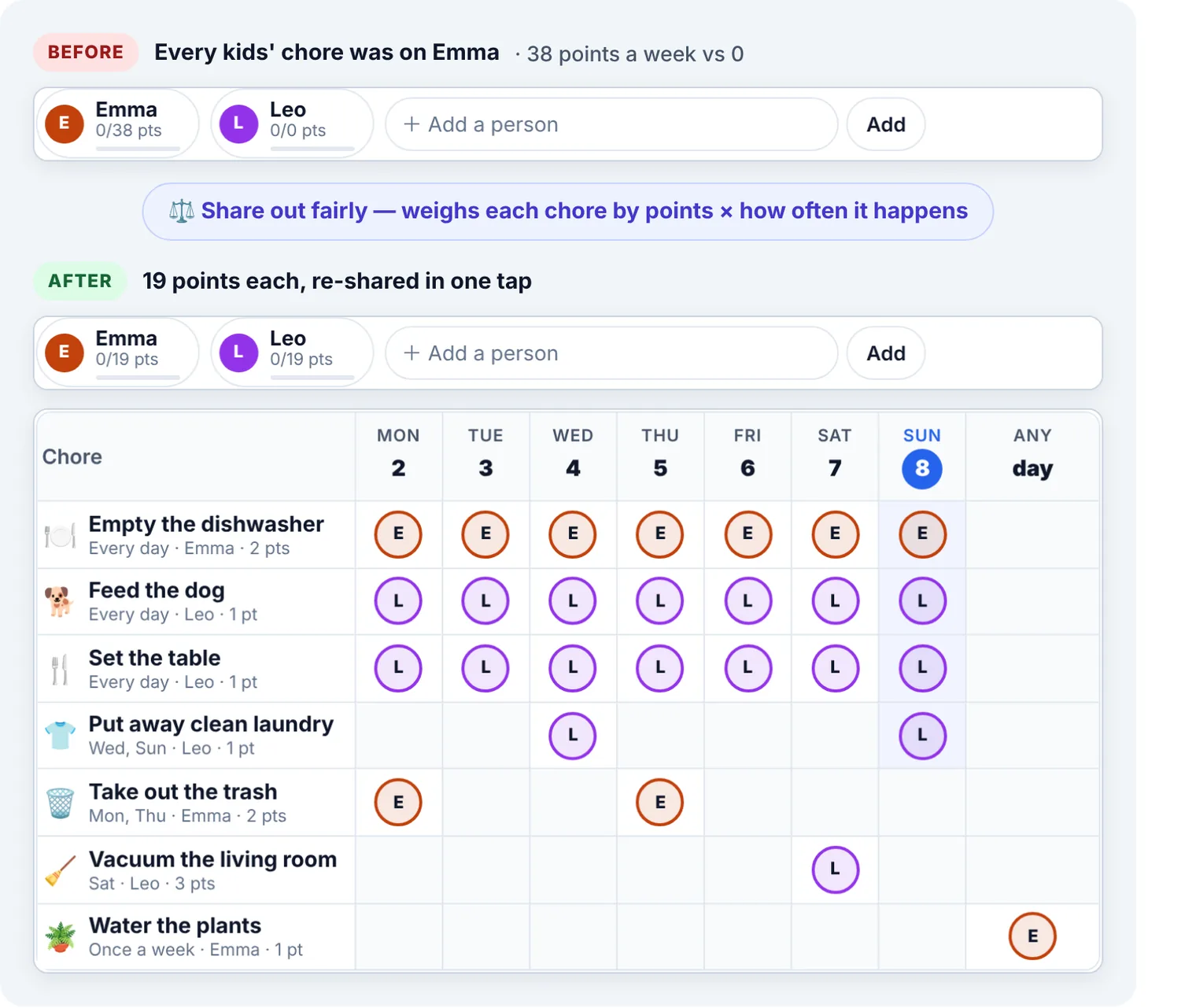
Fair doesn’t always mean equal, though. The split above gave 6-year-old Leo the vacuuming, which suits 10-year-old Emma better, so we moved it to her and gave Leo one of her lighter jobs. A good rule of thumb is that older children carry more points, while every child does at least some work each day. With adults, agree the points together before you share anything out. Arguments about whether cooking is “really” worth three points are best had once, at the start.
Step 5: Decide Who Does What — Fixed, Rotating or Shared
Not every chore should be handled the same way. These rules of thumb cover most homes:
- Keep a chore with one person when it builds a skill they are learning, or when one person clearly does it best. Emma owns the dishwasher because she is learning it properly.
- Rotate it weekly when the job needs continuity, so the same person handles it all week. Pets and trash day work well this way: whoever has the dog this week knows if it has been fed.
- Rotate it every time for small, frequent jobs that nobody wants, like setting and clearing the table. Then nobody can say it’s always them.
- Give it to everyone when it’s a personal job, such as making your own bed or tidying your own room. Everyone gets their own box.
- Leave it open to anyone for small extra jobs like watering the plants or emptying a full bin. Whoever does it gets the points, which works well for kids who want to earn more.
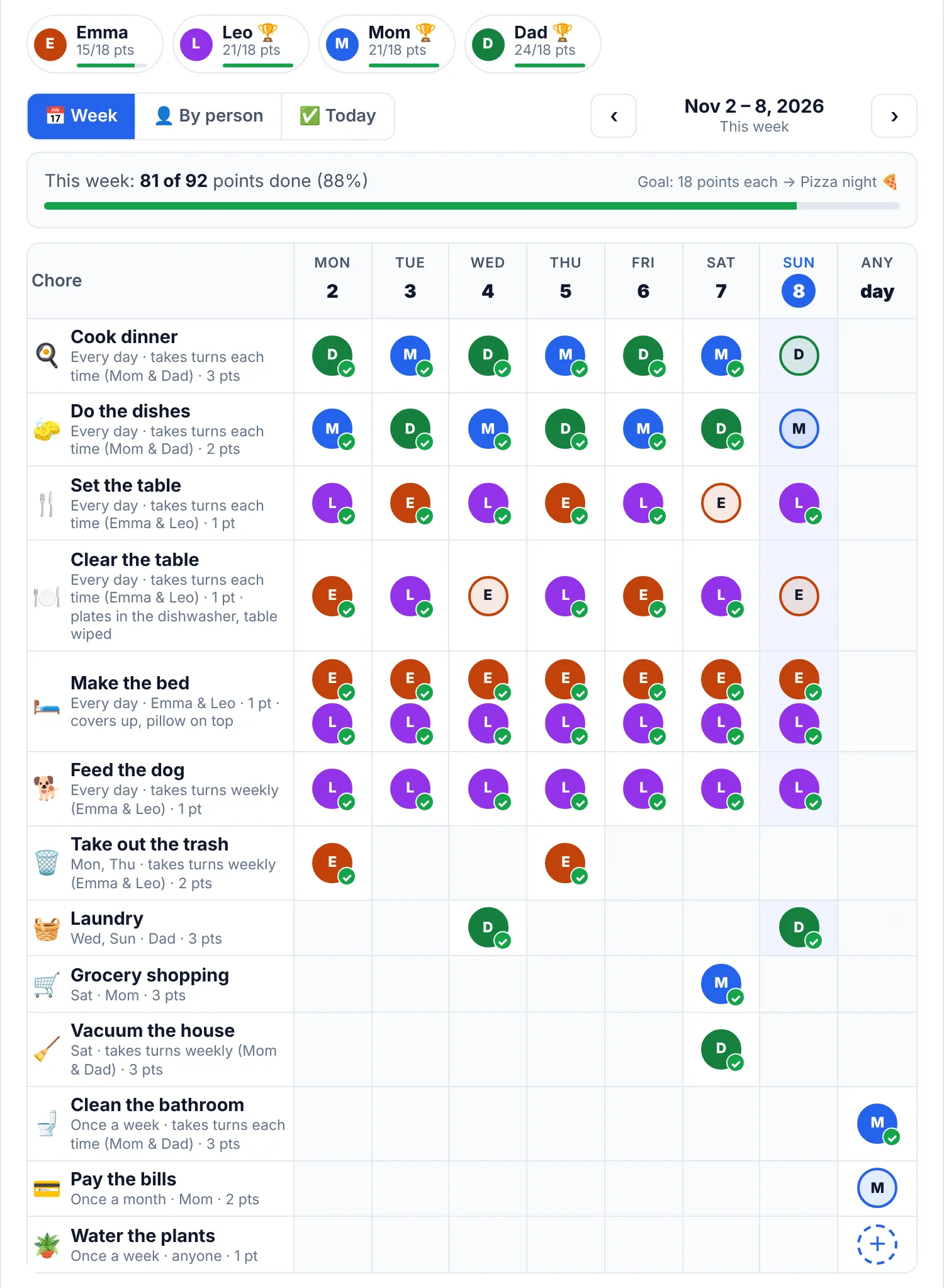
Rotations are where paper charts usually fail, because someone has to rewrite the names every week. In the Chore Chart Maker you set a chore to take turns once, and the turns carry on week after week in the order of the names at the top. You can look ahead to any future week to see who is up next.
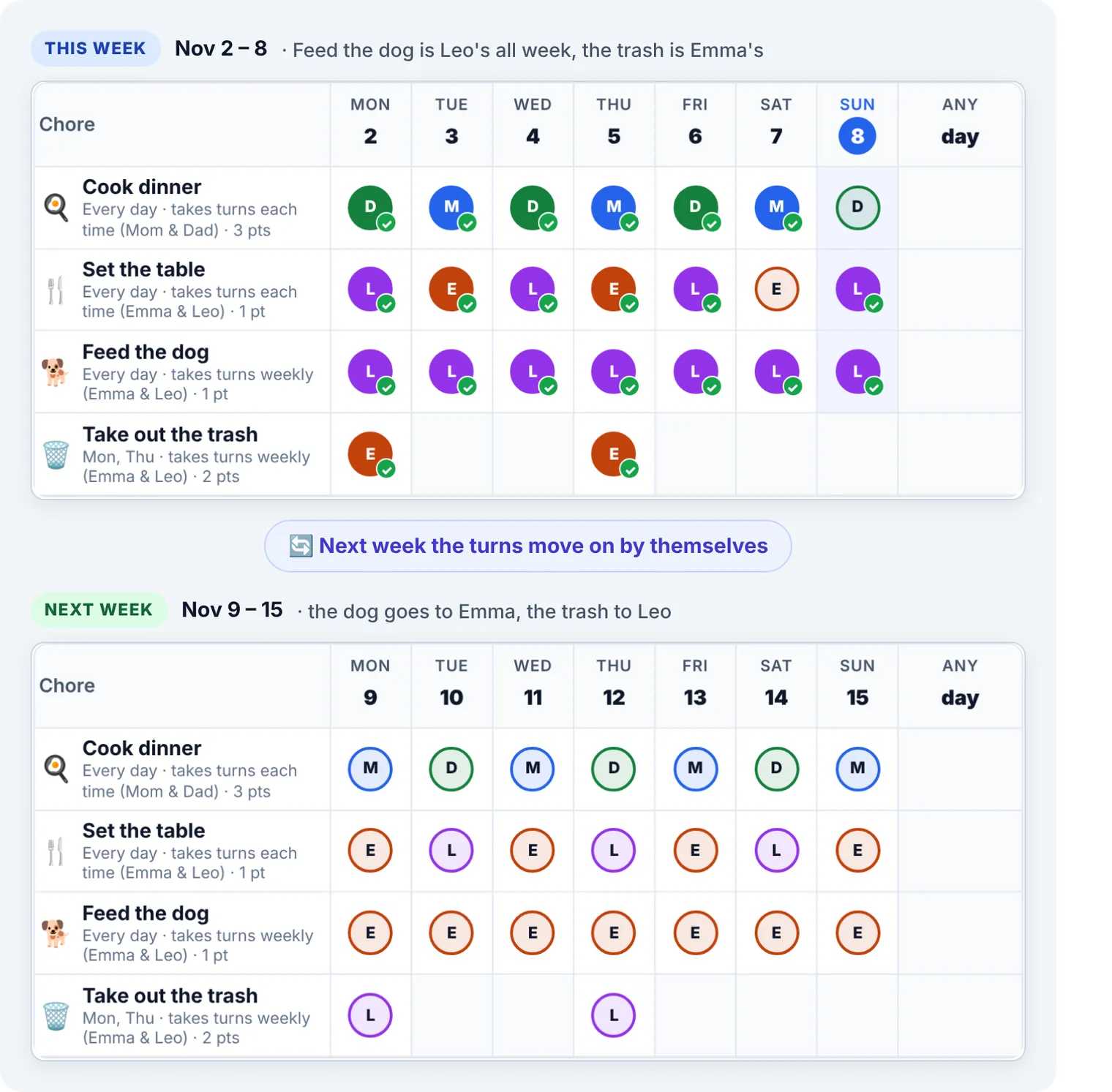
Plans will still change sometimes, because someone has football practice or a sleepover. Rather than redoing the whole schedule, use 🔁 Swap a day to hand just that day to someone else while the regular rotation carries on unchanged.
Step 6: Choose a Reward System That Fits Your Family
There is no single right answer here, and both medical groups mentioned above say rewards can help. AACAP suggests a star chart or reward system with specific goals. The AAP mentions allowances and stickers alongside sincere praise, and suggests praising effort and initiative more than a perfect result. These are the four most common approaches:
| Approach | How it works | Works best for |
|---|---|---|
| Contribution only | Chores are part of being in the family. The reward is praise and a calmer home. | Families who don’t want to link chores to rewards |
| Weekly goal + reward | Hit a points goal by Sunday and earn something agreed in advance, such as pizza night or picking the movie. | Ages 4–10. The reward is close enough to keep them going. |
| Allowance per point | Each point is worth a set amount, so a 20-point week pays a known sum. | Ages 8+. It also teaches basic money skills. |
| Mix | Daily personal jobs earn nothing extra. Bigger and optional jobs earn points or money. | Families with teens, and anyone who wants kids to earn more by doing more |
Whichever you pick, keep the reward close and the rules fixed. A reward at the end of the month feels too far away to a 6-year-old, and rules that change every week are confusing. In our example the family set a goal of 18 points each and a pizza night. With an allowance of $0.25 a point, each child can also see what they earned that week.
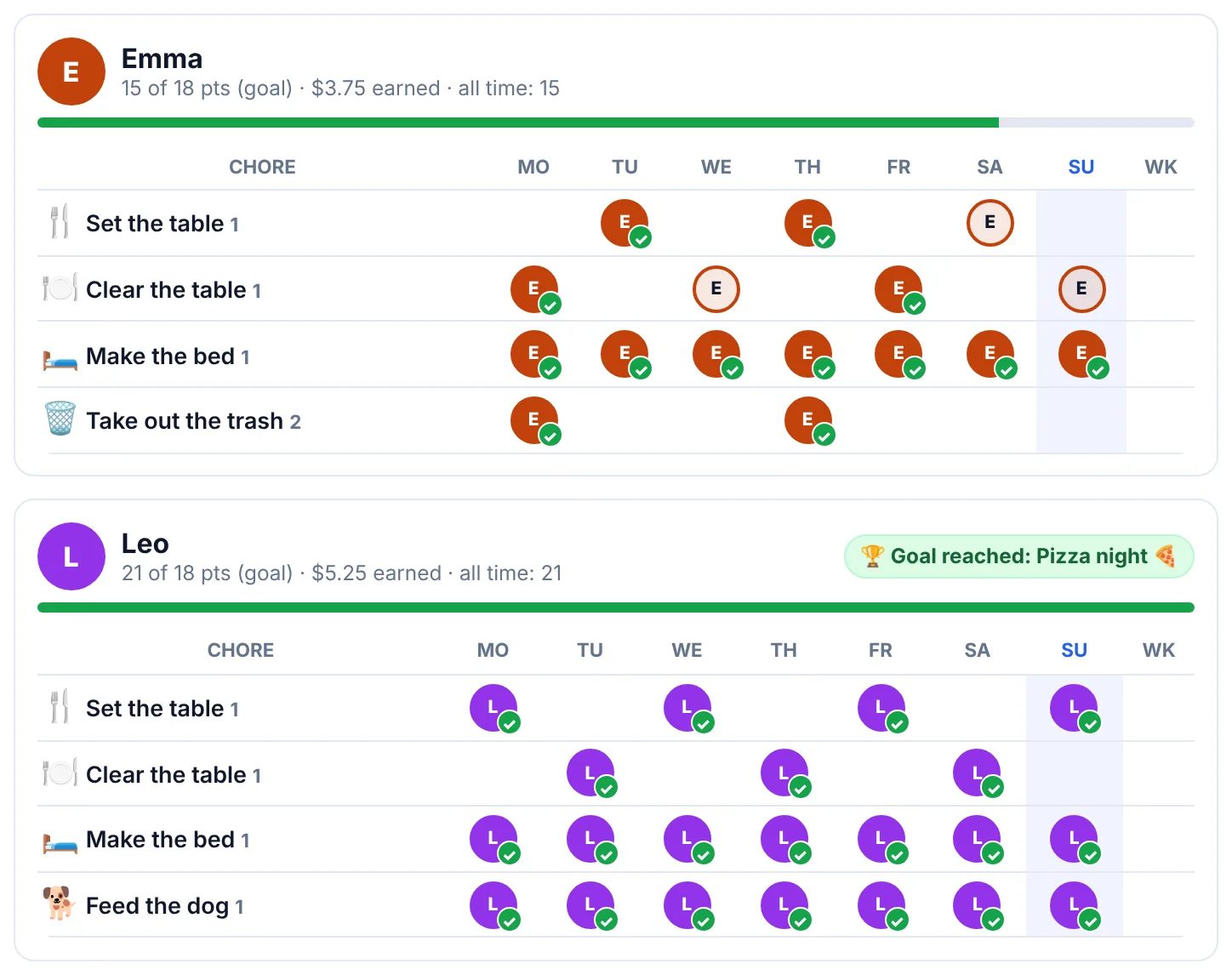
Step 7: Put It Where Everyone Sees It — and Review It Weekly
A chart only works if people see it. Put it next to a habit that already happens: the fridge door, the kitchen counter where breakfast is eaten, or the hallway by the school bags. Two setups work for most families:
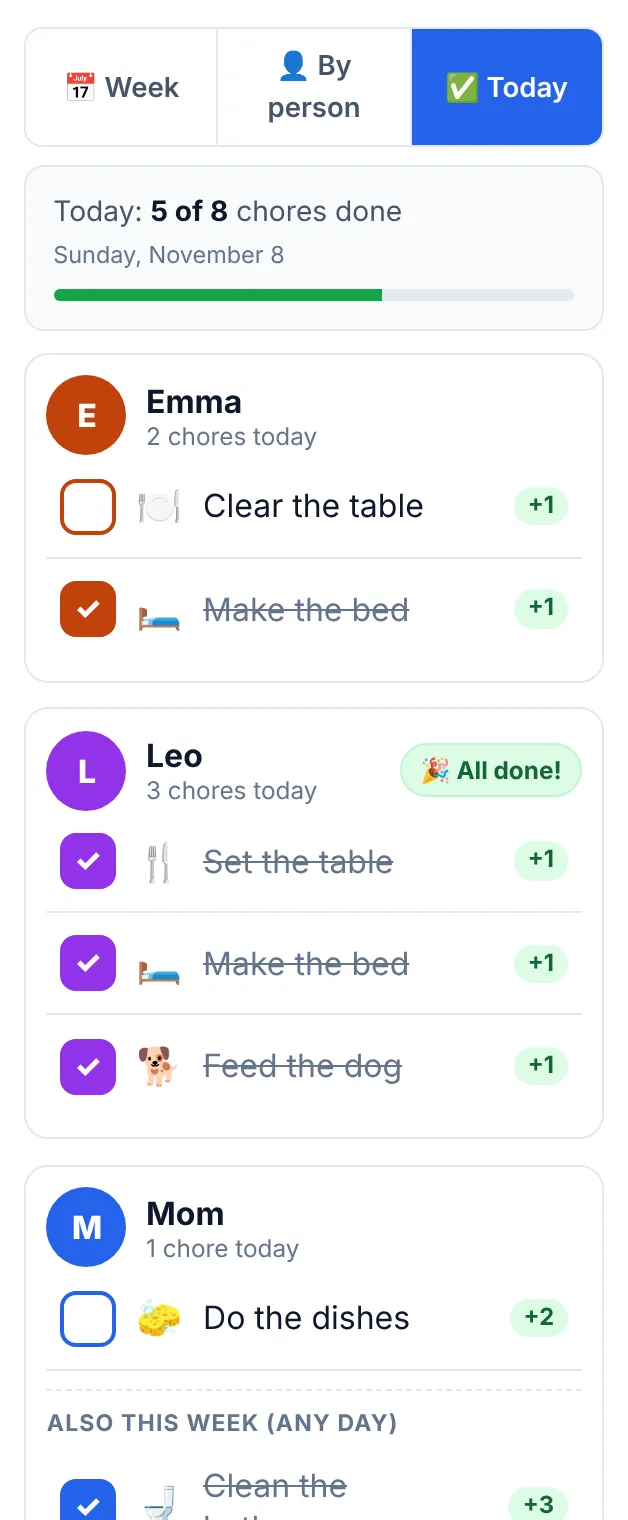
- A screen in the kitchen. The Today view on a phone or tablet shows each person a short, large checklist for the day. Tap 🔒 Lock before handing it to the kids. They can still tick off chores, but they can’t change the chart.
- Paper on the fridge. Print the week grid, one chart per person or a blank template. Turn off the dates for a reusable chart. Laminate it and tick the boxes with a dry-erase marker.
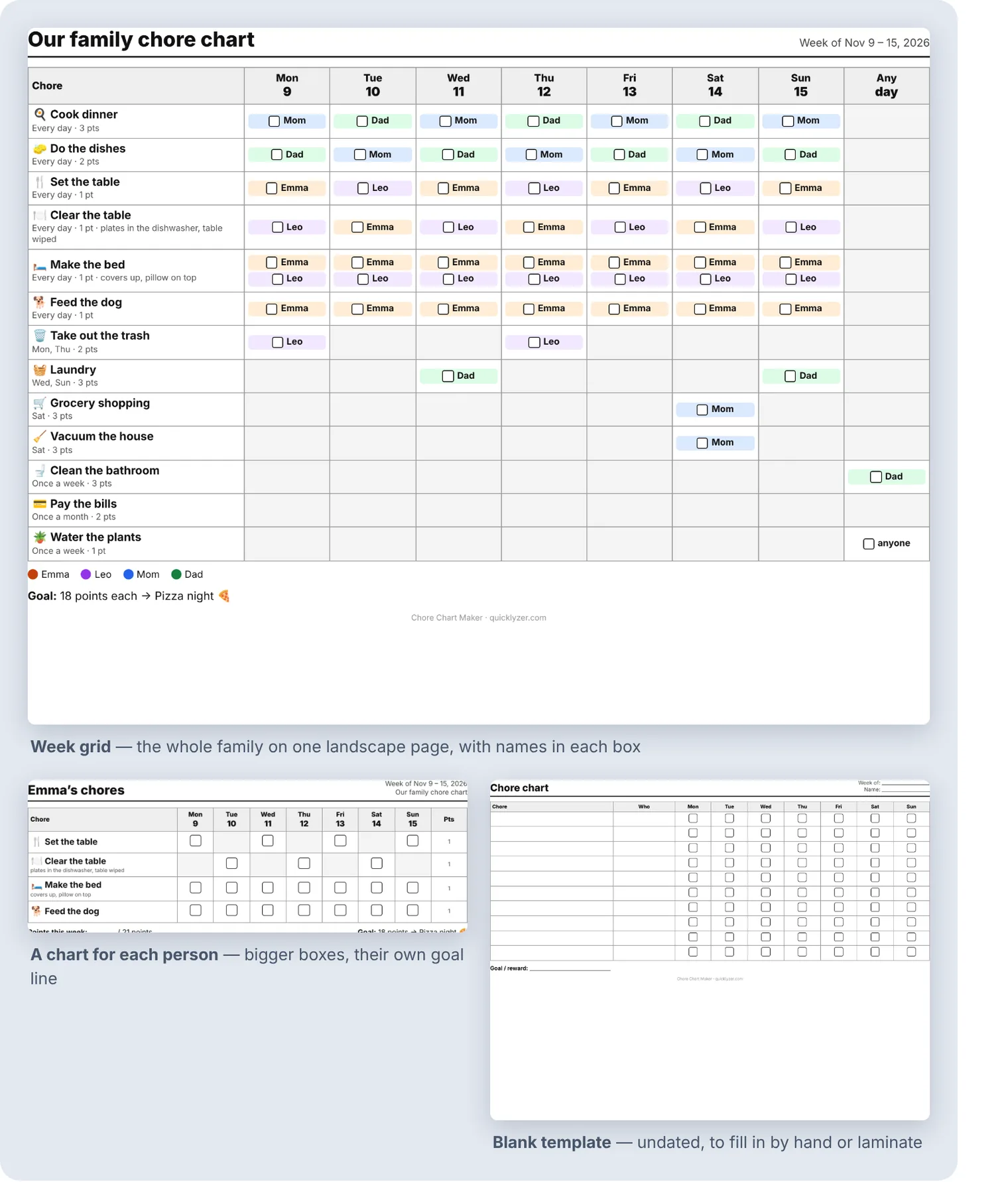
Then take ten minutes on Sunday evening to review the week together. AAP suggests regular family meetings where children get a say. Ask what worked, which chore everyone avoided and whether anyone is overloaded. Swap one job if needed, then celebrate the goal. It doesn’t need to be fancy. The aim is that nobody thinks the chart is unfair.
Chore Chart Setups for Common Households
Every template mentioned here is built into the Chore Chart Maker. Each one fills in a realistic set of chores with placeholder names that you can rename.
| Household | What usually works | Start with |
|---|---|---|
| One young child | A short daily routine tied to meals and bedtime, ticked off together | Daily routine (1 child) |
| Two or more kids, ages 4–7 | Everyone does their own personal jobs. Shared jobs like table duty take turns each time. | Young kids (ages 4–7) |
| Kids, ages 8–12 | Bigger jobs that rotate weekly, with points towards a goal or allowance | Kids (ages 8–12) |
| Teenagers | Fewer, bigger jobs, and “once a week, any day” chores that fit around school and sports | Teens (13+) |
| Whole family | Adults share cooking and dishes. Kids take the table, beds and pet. | Whole family (2 adults, 2 kids) |
| Roommates | Shared-space jobs rotate weekly. Small jobs are open to anyone. | Roommates (3 people) |
| Couples | Points switched on so both partners can see the weekly load | Couple |
| Kids who split time between two homes | A separate chart for each home, so each home has its own routine | One chart per home (you can keep several) |
How to Split Chores Fairly Between Adults
Roommates and partners need a chart as much as kids do, for a different reason. Adults rarely forget chores. They disagree about who does more. These steps keep it fair:
- List the planning work too. Writing the shopping list, booking appointments and paying bills take time even if nothing gets cleaned.
- Agree on points together, before anyone’s name goes next to a chore.
- Rotate the jobs nobody likes, such as the bathroom, the trash and the fridge, so nobody gets stuck with them for good.
- Use “anyone” chores for small jobs, so whoever is home can do them and get the credit.
- Check the totals once a month. If someone’s schedule changes, re-share the work instead of building up resentment.
Shared households also tend to share the shopping. Our guide to making a grocery list that saves time and money works well alongside a “Grocery shopping” chore that takes turns.
Common Chore Chart Mistakes (and How to Fix Them)
| Mistake | Fix |
|---|---|
| Starting with too many chores | Begin with two or three per child and add one new job at a time once those are a habit. |
| Vague jobs like “help out” | Use a specific job name and a one-line “done” definition. |
| Counting chores instead of effort | Give each job points and compare weekly totals, not the number of jobs. |
| The same person always gets the worst jobs | Rotate unpopular jobs weekly or every time they come up. |
| Rewards that are too far away | Use a weekly goal for younger children instead of a monthly one. |
| Nagging instead of checking the chart | Ask “what does the chart say?” and let the chart do the reminding. |
| Changing the rules every week | Keep the points and rewards the same for at least a month, and change things only at the weekly review. |
| A chart nobody sees | Put it where breakfast happens, or keep the Today view open on a kitchen tablet. |
Frequently Asked Questions
At what age should kids start doing chores?
Around age 2 or 3, with very simple jobs like putting toys in a bin or clothes in the hamper. AACAP notes that research suggests benefits from including chores in a child’s routine from as early as age 3. At that age the aim is the habit, not a perfect result.
How many chores should a child have?
Start small: two or three short daily jobs and one weekly job is plenty for most children under 10. Add a new chore only when the current ones happen without reminders. Teens can handle fewer but bigger jobs, such as their own laundry or cooking one meal a week.
Should kids get paid for doing chores?
That depends on your family. Some parents keep everyday personal jobs unpaid as part of family life and pay only for bigger or optional ones. Others pay a fixed amount per point. If you pay, keep the rate fixed and pay on the same day each week, so the link between effort and reward is clear.
How do I make a chore chart for multiple kids?
Put everyone on one chart so they can all see that it’s fair. Give each child their own personal jobs, rotate the shared jobs, and weigh everything with points so older children carry more. A per-child printout or the By person view gives each child their own list.
What is the best way to split chores with roommates?
Agree the list and the points together, rotate the shared-space jobs weekly and leave small jobs open to anyone. Send the chart as a share link so everyone starts from the same version, and check the totals monthly.
Do chore charts work for teenagers?
Yes, if the chart treats them like the near-adults they are: fewer, bigger responsibilities, flexibility about which day a job gets done, and a real reward such as an allowance or more independence. A chart on their own phone usually works better than stickers on the fridge.
Make Your Chore Chart in 10 Minutes
You don’t need an app or an account. Open the free Chore Chart Maker, add your people, pick a template or a few ideas by age, set points and turns, and print it or put it on the kitchen tablet. Your charts are saved in your browser, so they will still be there next week.
Sources
- American Academy of Child & Adolescent Psychiatry — Chores and Children
- HealthyChildren.org (American Academy of Pediatrics) — Age-Appropriate Chores for Children
- U.S. Bureau of Labor Statistics — American Time Use Survey, 2024 Results
- Pew Research Center — For American couples, gender gaps in sharing household responsibilities persist